French and Indian War
The French and Indian war was the final colonial war. It was fought between the colonies of British America and New France. The colonies didn't like the war because Britain was in debt after the war so they put taxes on everything. This lead to the american revolution because the Americans were upset about the taxes and they felt trapped.
Proclamation of 1763
It was issued October 7,1763. It was made to organize Britain's new North America and to stabilize their relations with the Native Americans. They couldn't move past a certain point and they felt like the king couldn't do that so they got really mad.
Sugar Acts
On April 5,1764, the molasses act was passed so that colonial merchants had to pay tax of 6 pence per gallon on molasses. Then eventually the sugar act was passed and reduced the rate of taxes from 6 pence to 3 pence per gallon. This eventually led to the revolution because they eventually became fed up with the taxes that they were being given.
Quartering Act
The quartering act was passed to address the concerns of troop deployment. It made sure that the soldiers were provided with their basic needs such as bedding,cooking utensils, firewood, beer or cider and candles.
Stamp Act
The stamp act was passed on all american colonists and it required them to pay taxes on every piece of paper they used. The money collected by the stamp act was used to help pay the costs of defending the american frontier near the Appalachian mountains. The colonists became upset because in the past, taxes were never really used to raise money.
Tea acts and Boston tea party
The British east India company had controlled all of the tea trading between India and the British colonies. As a result to the taxes on all of the tea, they refused to buy the tea, instead they smuggled tea in from Holland. The British government was determined to not go out of business, so they passed the tea act which allowed them to sell tea directly to the merchants..this made it much cheaper. On december 16, 1773 a group of men(dressed up like indians) went to the boston harbor and poured tea into the harbor.
The intolerable acts
Battle of lexington and concord
Date: April 18, 1775
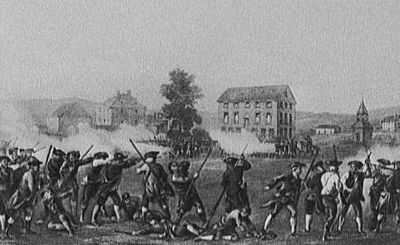
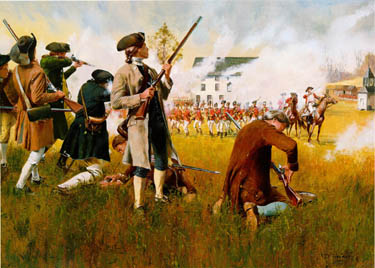
Summary: The first shots that started the revolution were fired in Lexington, Massachusetts. It was made up of two battles. British troops were sent to concord to capture john Hancock and Samuel Adams, but they had both been warned about it. Paul revere rode through town warning them that the British were coming so when the British arrived, they were ready to attack in Lexington.
Aftermath: The British found out that they escaped so they marched towards concord for ammunition. There was a big fight, and the minutemen made the British retreat.
Bunker hill:
Date: June 17, 1775
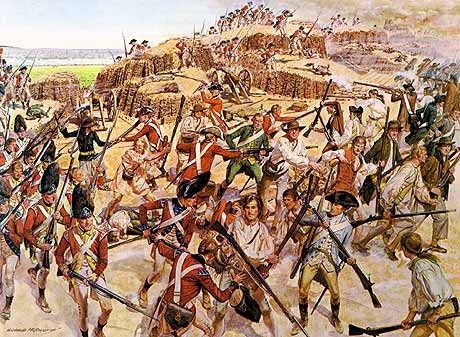
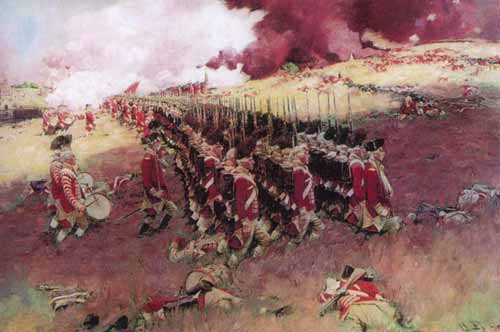
Summary: The British forces were in a very bad position. General Gage sent 2300 British forces to take the hill. Gunfire broke out until nearly three in the afternoon. Citizens of Charlsetown were forced to abscond as their city was burned. The Americans were low on ammunition so they waited. Then, attacked full force, scaring the Brits. Eventually they fell back, the colonists were forced to surrender due to lack of ammunition, and the British won.
Aftermath: There was a horrible loss on the part of the Brits. Many men were dead or suffering casualties. This was among one of the most deadly battles of the entire American revolution.
Trenton and Princeton
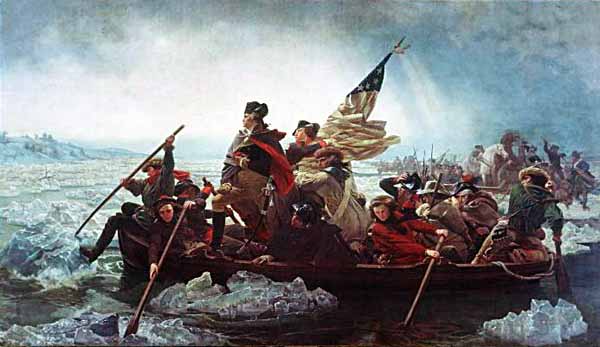
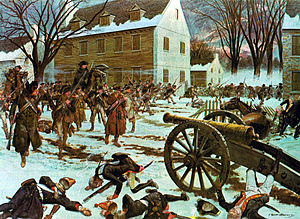
Date: December 25, 1776 - January 3, 1777
Summary: Washington led 24000 men across an icey river and took Garrison by surprise. After about an hour, the Hessians surrendered. Only two Americans were killed. More than 900 of the opposing mercenaries were taken prisoner. Washington got cocky and thought he could overtake another camp, so he occupied Trenton. Cornwallis got wise and pulled into Trenton. Washington, even the wiser, pulled a sneaky trick on Cornwallis and slipped passed them and moved on to Princeton. Aftermath: This was an American victory, and a great one. Washington's credibility was restored. Prospects for 1777 were looking encouraging.
Valley Forge
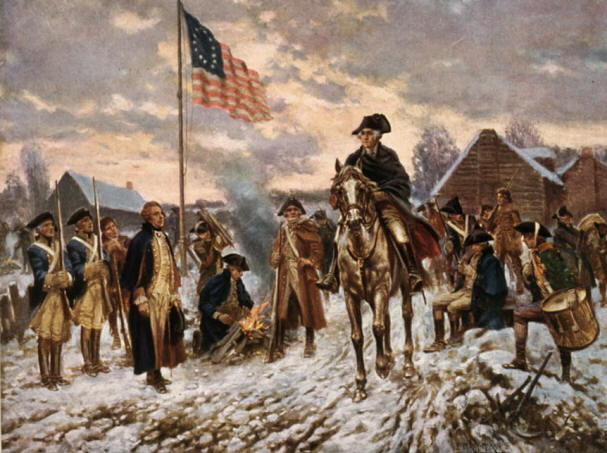
Date:December 19 1777
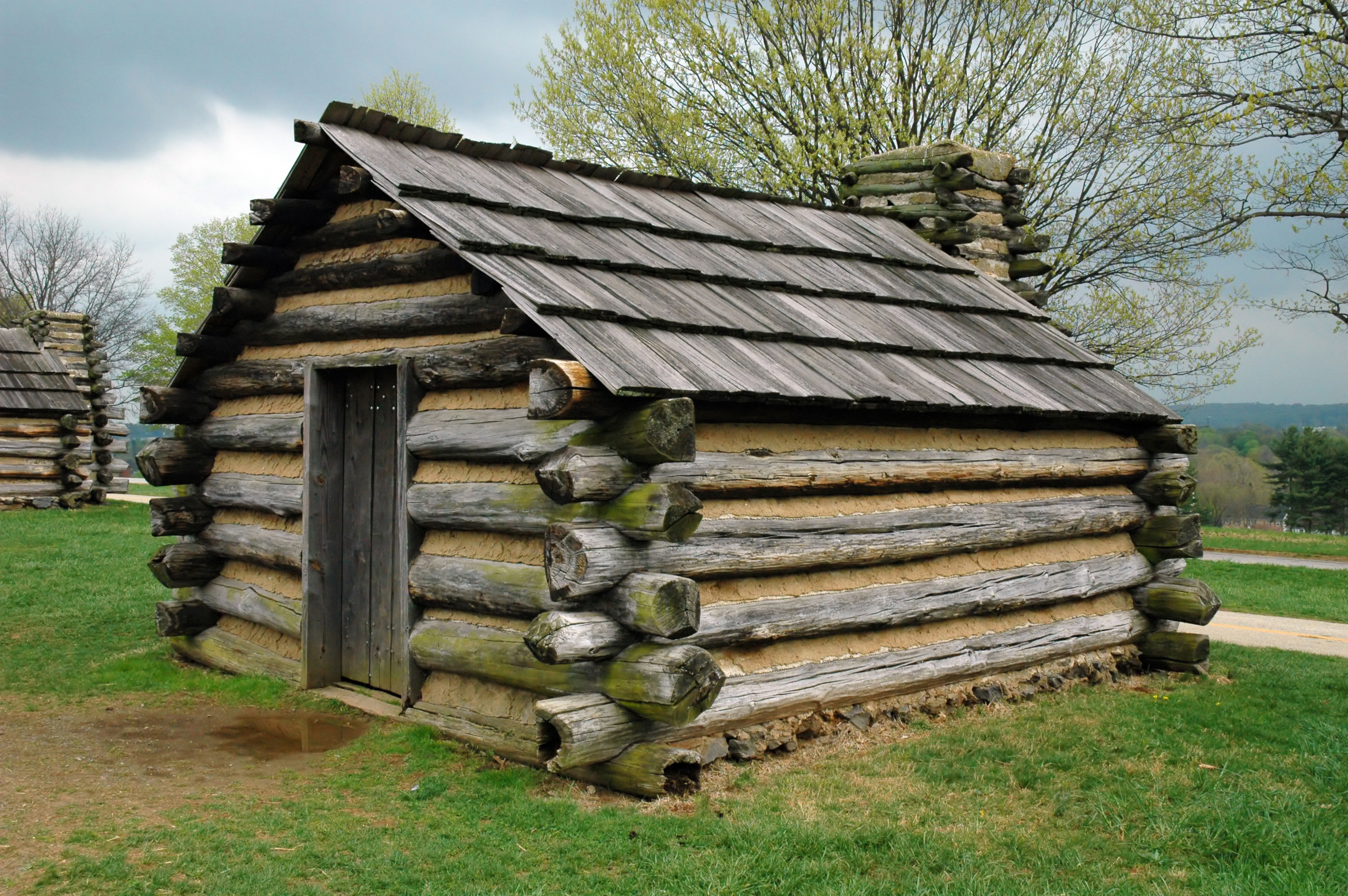
Summary: After a tough campaign of battles with the British, the continental army arrived at valley forge. The general had problems with getting supplies and things were only getting worse and worse. They had shortages of food and had to forage for food in the forests and farm fields that they passed. Washington was having a hard time getting support from congress and there were threats to his leadership.
Aftermath:Valley forge became a military base
Battle of Yorktown
Date: September 28 1781
Summary: The battle of Yorktown was one of the last battles in the revolutionary war. It lasted 20 days and ended with the British surrendering. 16,000 french and american troops went into yorktown. The British made an attempt to attack, but failed. Realizing there was no hope, the general of the British army gave up and called a truce.
Aftermath: The British retreated and the french/america won.